We took a year off. Upwork did some thinking.
Welcome back. Or welcome, period, if this is your first one. The newsletter is back. No product changelogs. No "10 ways to crush Upwork." Just what's actually moving on the platform right now, pulled from the data we sit on at GigRadar, written from inside an agency, not next to one.

March was the month money moved. Most agencies are still pointed at last quarter's lanes.
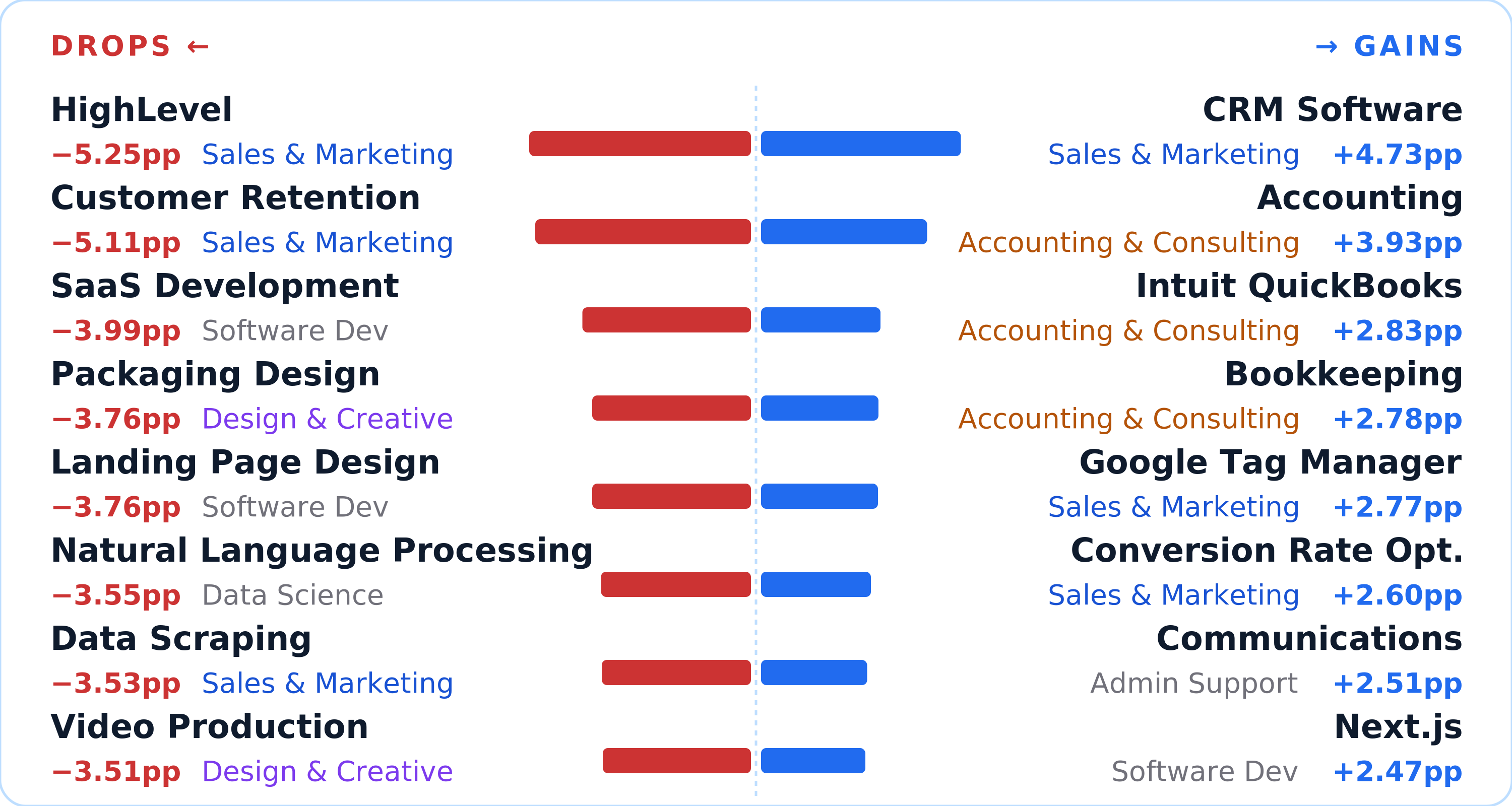
Total volume drop was the boring headline. The interesting one is which skills got more replies in March and which got fewer. We pulled the Feb to Mar reply-rate map for every skill we have a meaningful sample on.
What's actually happening here.
March broke a pattern. Four of the top eight reply-rate gainers are accounting skills. Accounting, Intuit QuickBooks, Bookkeeping, and Bank Reconciliation all surged. US tax season is the cleanest explanation. Clients hire help in Feb and Mar. By April the rush is over.
The other gainer cluster is martech tooling. CRM Software, Google Tag Manager, Conversion Rate Optimization, Internet Marketing all gained reply rate. Q2 planning. Marketing teams stand up new infrastructure in March.
On the drop side, the story is sharper. HighLevel and Customer Retention dropped 5+ percentage points each. SaaS Development, Natural Language Processing, and Data Scraping all bled. The "AI build my agent" boom that ran through January and February cooled. Clients still want AI features. They've stopped paying agencies to build the plumbing from scratch.
For web, mobile and software dev agencies
37,670 dev jobs posted in March. Not dead. Just different. Don't panic and rebrand. The category is huge. What changed is which skills inside it are getting replies. These had the highest reply rates in March for Web Development:
C# and Java still rank highest. Webflow and Machine Learning are pulling above the dev-category average too. Specialty wins. The generic "Full Stack Development" tag sits well below 4%.
What to do about it in May
Three moves. One, audit your scanner mix. If you have a HighLevel, Customer Retention, or SaaS Development scanner running, pause it for 4 weeks. Two, while tax season tail is still warm, stand up an Accounting scanner with a $25/hr+ floor. Even one close pays for the quarter. Three, if you're in dev, lean into specialty tags (C#, Java, Webflow, ML) over generic Full Stack. The reply-rate gap is 4x.
Why we report March, not April. Reply rates need a one-month settle period. A proposal sent on April 28 can still open a chat on May 25. By looking at March, every reply that was going to land has landed. Looking at April today would understate every gainer by ~1 percentage point and overstate every drop by the same. We use the most recent fully-settled month as the reporting window.
Specialized Profiles silently broke. Switch to General now.
Since March, freelancers submitting bids from a Specialized Profile have been getting errors. The bid just crashes. Upwork hasn't officially announced this. They might reverse it. Right now, the only working strategy is your General Profile.
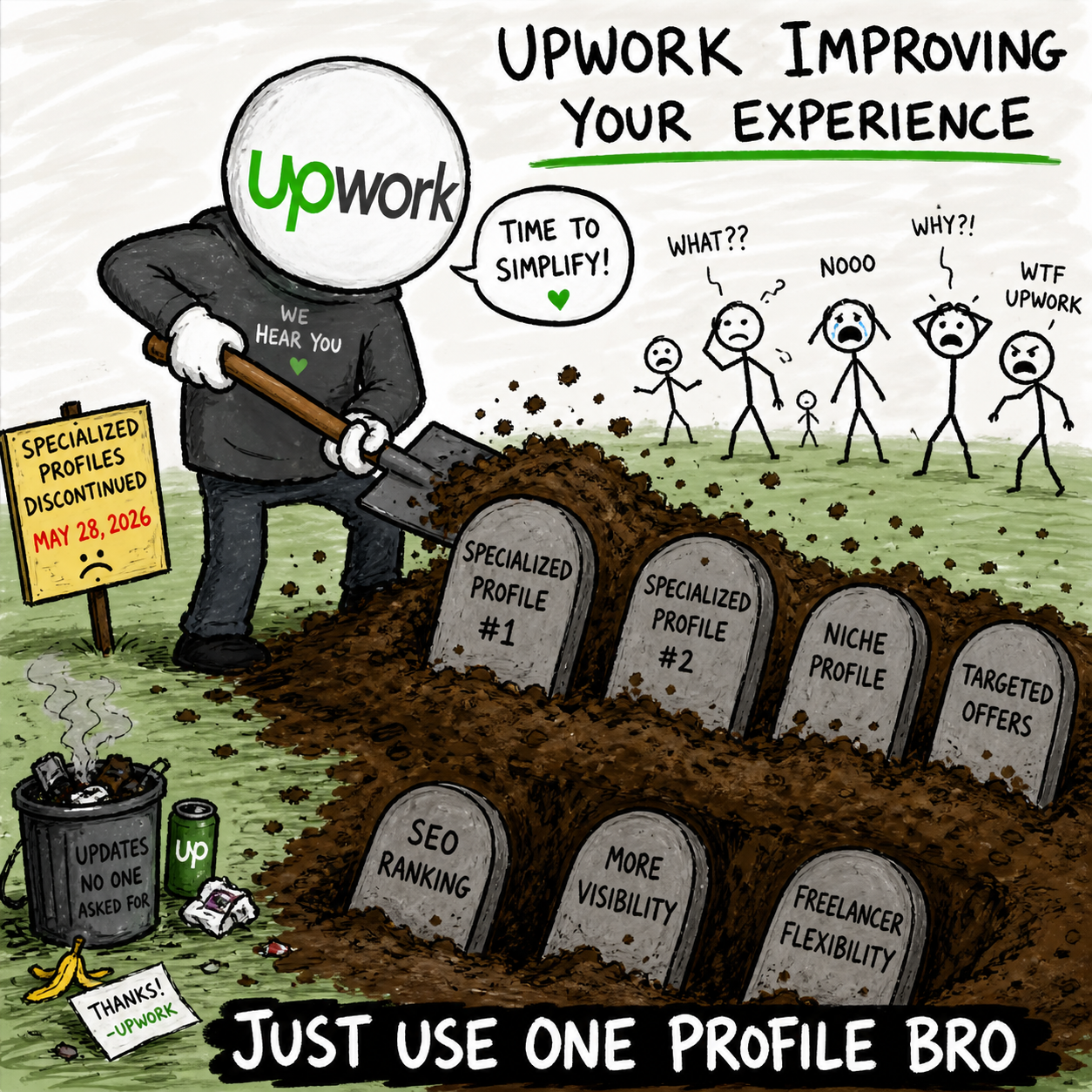
Don't delete your Specialized Profiles, in case Upwork un-breaks them later. But the move this week is to consolidate everything into your General Profile. Specifically:
- Move the keywords up. Every keyword-rich line you had in a Specialized Profile needs to land in your General Overview. Merge, don't replace.
- Do not trim the Overview. Less text means fewer keywords means less inbound. We see this mistake constantly. Long Overview wins.
- Refresh portfolio + skills. New portfolio entries register as new skills, which boosts ranking. Cheapest lever in the platform.
- Heads up. Project Catalog is exclusively for inbound. Certifications and employment history matter more for invites than outbound bidding.
Want to know if your Overview actually scores well after the merge? We built a free tool that grades your profile against the same fields the algorithm weights at optimizer.gigradar.io. Upwork's official guidance is here, if you want to read it from the source.
Ned Thomas built a 12-second proposal pipeline. 22% reply rate.
Quick story. A guy named Ned messaged me in March. He'd pointed Claude Code at our public API and built a pipeline that generates a brand new Next.js site for every Upwork client he bids on. Not a template with fields swapped. A unique site, written from scratch, deployed to its own URL. From job posting to bid landing in the client's inbox: 12 seconds.
Here's the part that made me sit up: the official Upwork API can't submit proposals. Their public GraphQL has no mutation for it. Ned wasn't using their API. He was using ours, which can. I wrote the whole thing up, including the architecture, the four endpoints, and a working code sample you can copy at gigradar.io/blog/upwork-api.
Two things we shipped that work even if you're not a customer.
Most of what we build lands inside GigRadar itself. Two pieces ship outside it. Both are designed to be useful even if you never sign up.
Profile Optimizer. Grade your Upwork profile the way the algorithm does.
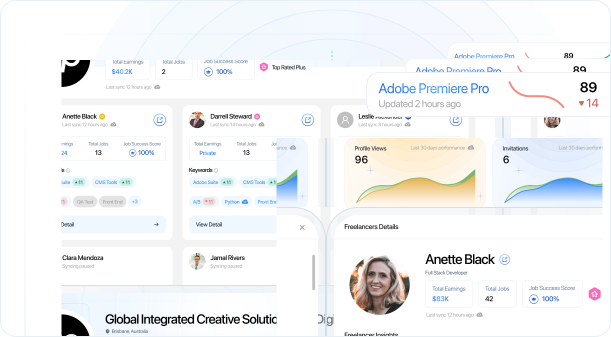
Free to start. Drops your Upwork profile through the same fields ranking actually depends on. Outputs an A through F grade plus the specific things to fix, in the order they matter. We've graded over 50,000 profiles. Most agencies sit at C or worse and don't know why.
GigRadar CRM. A real CRM for Upwork agencies. Not a Google Sheet.
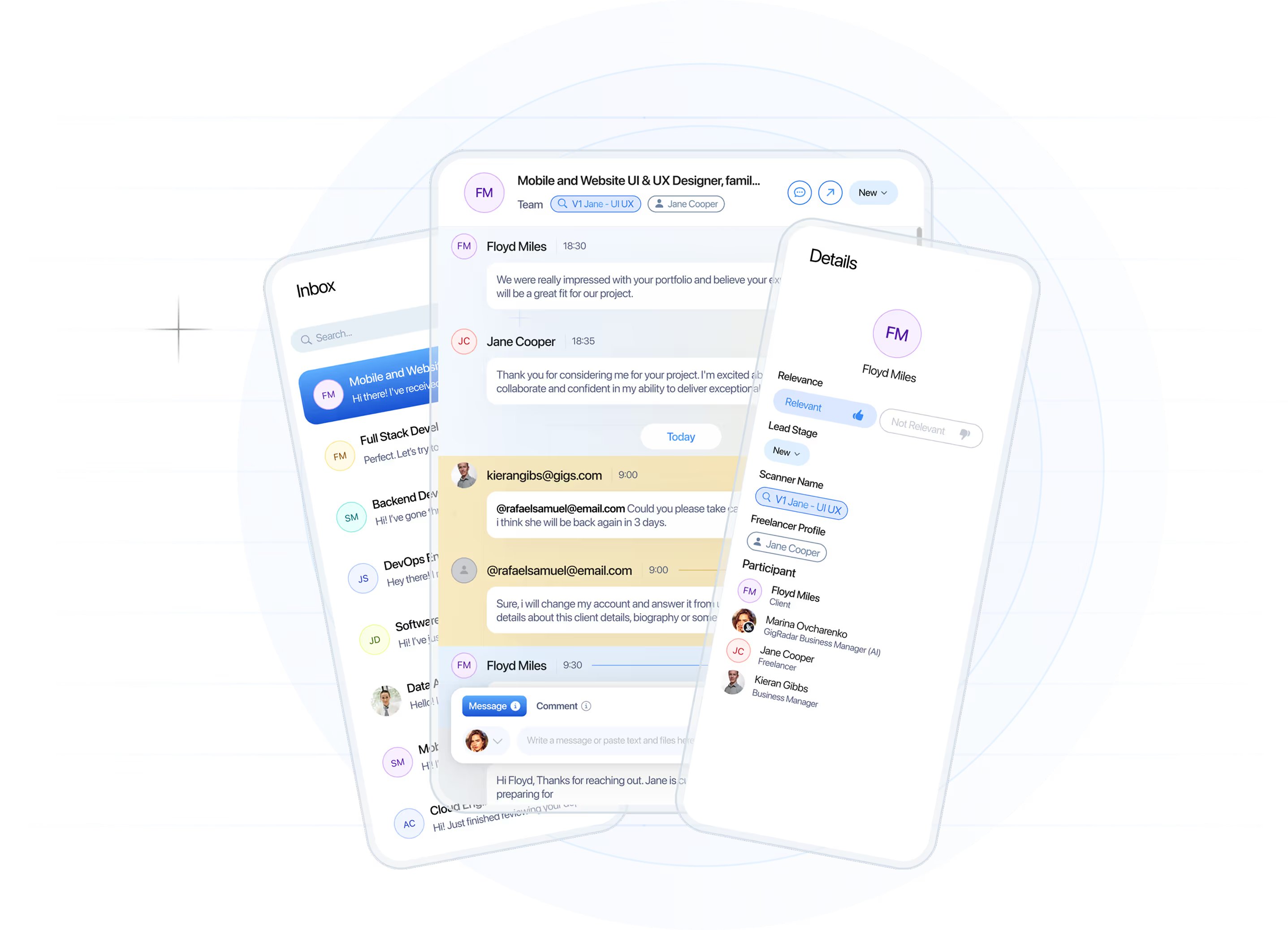
Replaces the spreadsheets, the inbox-zero rituals, and whatever you've been duct-taping to track your Upwork pipeline. Direct Upwork integration, so reply alerts hit you faster than the platform's own webhooks. Scheduled meetings, deal stages, named owners. The whole CRM treatment, designed around how Upwork agencies actually work.
Don't have time to run Upwork properly? We do it for you.
Same data you saw above, plus the playbooks we've built across 800+ agencies. A dedicated manager on your account, GigRadar fine-tuned to your profile, proposals going out daily, leads replied to, meetings booked. You show up to the call. We handle everything before it.
- 1. We run it. You don't. Dedicated manager sets up GigRadar on your profile, then runs daily. Bids, replies, scheduling.
- 2. Your profile stays yours. Every review, every client, every dollar earned. All on your account. We leave, you keep it.
- 3. It compounds. Upwork rewards active, consistent accounts. A profile we run for 6 months beats one set up and abandoned. Most agencies never get there.
Best fit so far is web dev, digital marketing, AI and automation. Full breakdown plus a strategy call form lives at dfy.gigradar.io.
Refer 3 agencies. Collect $10K+. Zero delivery.
You make the intro. We close. We deliver. You get 20% of the first deal plus 10% of every payment for 12 months. Average closed referral pays $881 (SaaS) or $2,660 (Done For You). 90-day cookie. We wire monthly.
Numbers and apply form at gigradar.io/partnerships.
Ten threads. The ones operators ask for first get written first.
The list below is what's queued. Subscribers vote with replies. If a topic on this list pulls you in, subscribe and tell us. We read every reply and the most-asked themes ship next.
- More March category data. Niche by niche.
- Real Upwork agency case studies. Revenue, scale, what broke.
- Cover letter teardowns. Winning openers, side by side.
- Upwork algorithm changes and rumors. What's actually shifting.
- Lead gen outside Upwork. LinkedIn, cold email, AI SDRs.
- JSS recovery. The actual mechanics of bringing it back from a dip.
- Pricing and packaging. Productized vs hourly vs retainer.
- Hiring and team building for Upwork agencies.
- Founder stories. How agencies actually got past $1M on Upwork.
- Client retention and LTV. Turning one project into ten.