The 150-word cover letter is killing your reply rate. We measured 134,000 of them.
Every coach says keep it under 150 words. Every template emits exactly that. It's the worst possible length. Reply rates collapse in the middle of the curve and lift on both ends. Chart below is 543 agency teams with 134,000 bids.

The middle of the bell curve is where cover letters go to die. 134,000 proposals say so.
Every coach says keep it under 150 words. Every template lands at 100 to 149. That's the dead zone. The reply curve isn't flat. It's a U. Both ends win. The middle loses.
Note: this chart is category combined. The right length for your bid depends on your category. Some categories want long. Clients there expect a 250 to 400 word pitch with deliverables and samples attached, and they read the whole thing. Other categories are overwhelmed. Web and mobile is one of them. Clients there skim the first three lines. A short cover letter that opens a chat beats sending your whole resume.
88 percent of teams write cover letters in the 100 to 149 word range. That's the bin with the lowest reply rate. The most common length is the worst-performing length. Middle bins all sit between 6.7 and 7.3 percent. The tails win.
If your template hits 100 to 149 words, rewrite it. Cut under 50 (one-liner with credibility) or expand past 200 (detailed pitch with specifics). The middle is empirically where bids die.
What you actually open and close with
Openers that win. A question lifts reply rate by 3.08 points. Top-quartile teams use question openers 6× more often than the bottom quartile. Examples: "Have you tested X before?" "What's the deadline behind the deadline?"
Closers that win. The highest-lift phrase in the dataset: "Any questions you may have?" at +5.9 points. Caveat: probably confounded. Treat as a phrase to try, not a guarantee.
Phrases that kill. The wave emoji at the start. "I want to absorb your vision." Repeating the client's exact post wording back at them. Experienced clients flag all of these as instant turn-off.
Reply rate is not hire rate. Everything above wins more conversations. Closing them is a different muscle. Issue 3 is the hire-rate teardown.
Tamara on cover letter openers.
Hi friends. Tamara here.
I tested this for a month. Removed every "I am" from my opening line. Replaced with a question. Reply rate jumped, no other changes. Sample: 40 bids old way, 40 bids new way, same week, same scanners.
The trick: your first sentence is the only one most clients read. "I am a developer with 8 years of experience" is everyone's first sentence. Eyes skip it. A question makes them stop.
Bad: "Do you need a developer?" Generic. Spam.
Good: "Is this the Stripe migration you mentioned in your last post or a new one?" Specific. Proves you read.
Try it this week. Tell me what you see.
Hugs,
Tamara · levit.tips
The clients you have been filtering for reply 2× worse than the clients you have been filtering out.
Every Upwork course says target whales with 5-star ratings. Our data says the opposite. Whales drown in bids. Top-rated clients have preferred freelancers. Here's the breakdown.
The under-3.5-star row looks like a free lunch. It's not. Those clients reply at 13.1% partly because they post lower-paying jobs most agencies refuse to bid on. The pool is empty, so the few who bid get heard. But the work is underpriced and the JSS risk is real. Treat this row as "more conversations, harder to close clean." Not as "filter only for under 3.5."
Reply rate is not deal size. A 3.85% reply on a $500k whale beats an 8.15% reply on a $1k tire-kicker, on revenue. The takeaway is not "filter out whales." It's that the middle market, $1k to $50k spend, 4.0 to 4.7 stars. Is where the reply math actually works. Most agencies over-filter.
Turbo Mode is live. From 15 minutes to 5.
GigRadar already bids fast. Default response time is under 15 minutes. Turbo Mode pulls it to 4 to 6 minutes average. Reply rate peaks in the first 3 hours after a job posts. Inside those 3 hours, the first 15 minutes is where the best clients respond. Going from 15 minutes to 5 is the difference between top 20% of responders and top 3%.
Here's the part most automation tools miss. Fire instant proposals and Upwork notices. The platform models freelancer behavior. Robotic patterns (instant bids, identical timing, copy-paste cover letters) put your account at risk. We've watched competitors flame out for this exact reason.
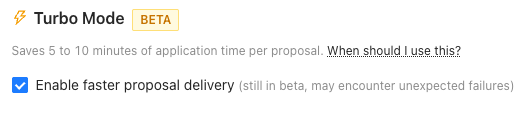
Turbo Mode is built around real human behavior. Bid timing varies inside a natural window. Cover letters get light personalization automatically. Daily volume stays inside a human threshold. You get the speed without the risk.
If you're a GigRadar customer, Turbo Mode is in your dashboard now. Default off. Turn it on per scanner.
Not a customer yet? Book a 15-minute walkthrough.
Laziza. An agent that builds your Upwork lead gen the way you describe it.
Clay launched Claygent Builder this week. Clay is the GTM data tool every modern outbound team uses. Claygent is their agentic interface, and the new Builder ships it to non-technical operators. You describe what you want, the agent builds and tests, you deploy.
We're building the same thing for Upwork lead gen. Internal codename Laziza. Describe what you want your GigRadar to do, the agent figures out the scanners, filters, bid templates, and follow-up logic. Soon you'll work with your Upwork lead gen as easily as you describe it.
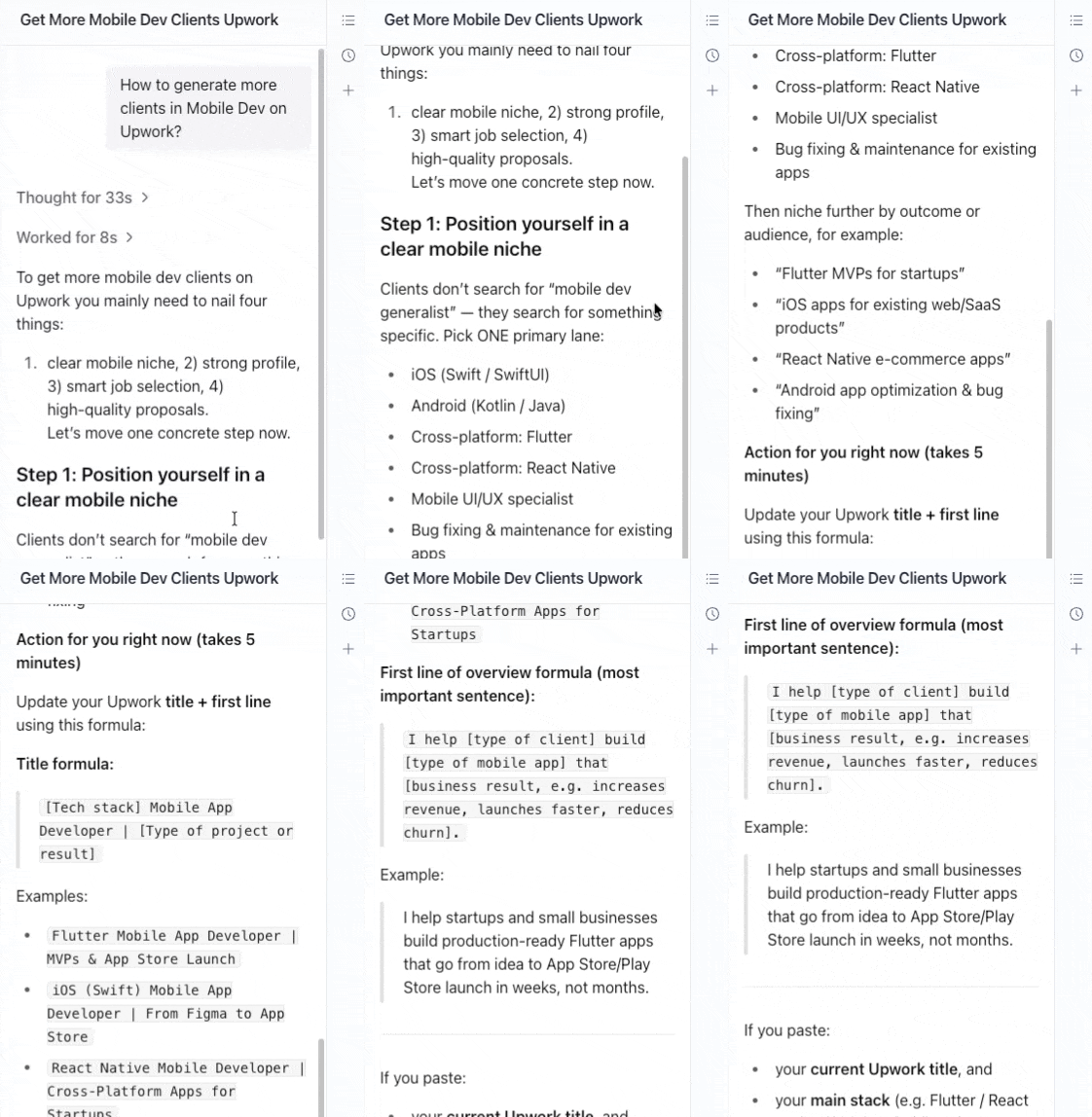
In progress. We'll share the first preview to subscribers when it's ready.
The platform is mid-restructure. Here's what it means for agencies running bids this month.
Upwork reported Q1 2026 last week. Combined with the 24% staff reduction on May 7 and Uma rolling out as a full agent, the platform is mid-restructure. Here's the agency-owner read.
The numbers, in plain language
Revenue up 1.4% YoY (slow). Active clients down 3% (demand consolidating). AI-related work up 40% (where money's moving). GSV per active client up 5%, mostly fee passthrough. The earnings release.
What this means for agency owners
The pie isn't growing but it's concentrating. Clients who stayed are spending more on bigger projects. Fewer one-off $50 gigs, more retainer work for capable teams. Agencies that can credibly handle AI-scoped projects are getting routed more work. Commodity categories are getting squeezed.
The April data backs this up
April reply rate hit 5.67%, up 0.38 points from March, even though job volume dropped 7.4%. Fewer jobs, better odds per bid. The platform is getting more efficient for the agencies that show up.
The contrarian take
Cold email and LinkedIn are getting harder. r/sales has a 332-upvote "Outreach is dead" thread where operators are dropping 8,000-emails-a-week sequences for 40 hand-researched emails a day. The work is finding Upwork agencies. Upwork's inbound mechanic still has structural advantages the outbound channels are losing. Position for AI-capable work in Q2 and you'll compound.