🎬 Upwork Market Report 2026 walkthrough. The 6% client cliff, the AI-category trap, and the 2026 niche reply-rate map in two minutes. Watch on YouTube
TL;DR: Upwork Market Report 2026
- Upwork's active-client base shrank 6% in 2025 and is flat-to-down again in Q1 2026. The platform is contracting at the buyer end while spending per remaining client rose 5%.
- Total Gross Services Volume sits at $987M for Q1 2026, dead-flat year-over-year. Growth is concentrated in two pockets: AI work (+50% YoY) and Business Plus mid-market (+49% QoQ).
- The 0–15% variable freelancer fee that replaced the flat 10% in May 2025 now charges 15% on commodity categories (general VA, basic content) and 5–10% on scarce ones. Generalist agencies are paying 50% more on the same revenue.
- Across 133,872 GigRadar agency proposals (Dec 2025–Feb 2026), the platform-mean reply rate is 7.45%. The under-fished niches reply at 11–14%; the saturated traps (Web Dev, Mobile, AI/ML) reply at 5–7%.
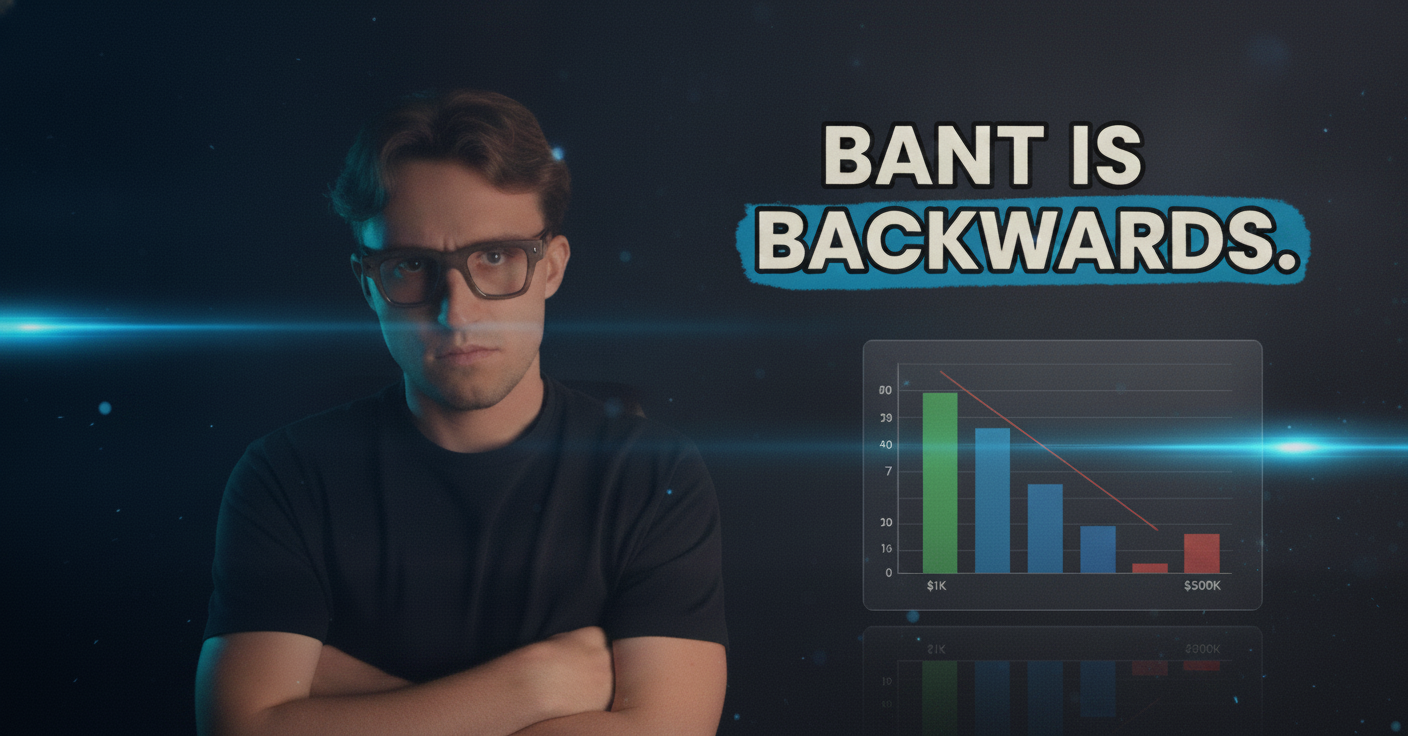
- The "filter for high-spend clients" advice is backwards in 2026. Whale clients ($500k+ lifetime spend) reply at 3.85%. Clients in the $1–5k spend band reply at 8.15%.
Upwork added zero net clients in Q1 2026, and the agencies still bidding are competing in a market where the buyer pool actually shrank.
The 2025 active-client count fell from 832,000 to 785,000, a 6% drop. Q1 2026 ended at 784,000.
Every public earnings call from Upwork in 2026 calls this "intentional rationalisation". For agencies, intent is irrelevant: the hiring pool is smaller.
This report pulls together what actually shifted: Upwork's own Q4 2025 and Q1 2026 financial filings, the May 2025 fee restructure, the $300M annualised AI segment, and 133,872 outbound proposals from GigRadar's pipeline (Dec 2025–Feb 2026).

Interactive Tool
2026 Upwork Agency Health Check
Five inputs, one verdict on whether your 2026 setup is in the green band or quietly burning Connects.
Benchmarks from 133,872 outbound proposals in GigRadar's pipeline, Dec 2025–Feb 2026.
The 6% client cliff: why fewer companies hire on Upwork in 2026
The single most under-discussed number in Upwork's 2025 disclosures is the 47,000 active clients that left the platform. Year-over-year client count fell from 832,000 to 785,000, a 6% contraction (Q4 2025 release).
Upwork's framing is "low-value, high-volume rationalisation". The economic translation: the company is letting low-spend clients churn and pricing the survivors harder.
Q1 2026 GSV per active client rose 5% to $5,138 while total GSV stayed flat. That is the textbook signature of a price-led, not demand-led, business.
For agencies, this matters more than any rate or fee story. The implicit assumption behind every "Upwork is a renewable lead source" pitch is that the buyer pool is at least static.
It is not. Q1 2026 added zero net active clients on a base that was already 6% smaller than the prior year.
The Business Plus mid-market tier grew 49% quarter-over-quarter and 38% of those accounts are net-new to Upwork. The marketplace cohort is shrinking faster than Business Plus is replacing it.
If you ran an Upwork agency that scaled by sending more proposals to roughly the same buyer pool every quarter, your inputs changed. Same proposal volume now lands in a 6%-smaller pool with 5% higher willingness to spend per buyer, and reply rates will compress unless category-fit and bid-posture get sharper.
AI is the only category growing, but the AI/ML niche is already over-fished
AI work is the biggest line in Upwork's 2026 growth story. Q4 2025 disclosures put annualised AI Gross Services Volume above $300M, up 50% year-over-year.
AI Integration & Automation, the more enterprise-flavoured sub-segment, grew over 90%. Demand for top AI-enabled skills more than doubled in 2025 per Upwork's In-Demand Skills 2026 research.
So an agency reading the press release would assume "pivot to AI" is the obvious move for 2026. The agency-side data says otherwise.
Across 133,872 outbound proposals in GigRadar's pipeline (Dec 2025–Feb 2026), the AI & Machine Learning subcategory replied at 7.21%, against a platform mean of 7.45%.
AI & ML is one of the most-bid subcategories: 3,535 proposals in the window, against ~37,000 in Web Development. Every freelancer and agency on Upwork already pivoted to AI, and the hype outran the bidder economics.
Pivoting your agency's primary scanner to "AI & Machine Learning" because Upwork's earnings narrative says that is where growth is. The growth is real, and so is the queue of agencies that already arrived.
The economically interesting AI work in 2026 is adjacent: Information Security & Compliance (11.21% reply), Desktop Application Development (8.98%), and what Upwork's research calls "AI Apps & Integration", which sits inside Web/Software Dev rather than the AI & ML subcategory.
Upwork's own demand data points to data analysis, AI data annotation, knowledge representation, and team training as fastest-growing skill clusters, none of which sit inside the AI & ML subcategory bucket where bidder pile-up is worst.
The under-fished niches actually outperforming the platform mean
The KB analysis ranks every Upwork subcategory by volume and reply rate. The "where to play" framework is simple: low volume + high reply = under-fished, high volume + low reply = trap.
| Subcategory | Reply rate | Status |
|---|---|---|
| Game Design & Development | 14.58% | Under-fished |
| Lead Generation & Telemarketing | 14.38% | Under-fished |
| Sales & Marketing Copywriting | 14.24% | Under-fished |
| Marketing, PR & Brand Strategy | 13.64% | Under-fished |
| Information Security & Compliance | 11.21% | Under-fished |
| Product Design (UI/UX) | 10.78% | Under-fished |
| Customer Service & Tech Support | 10.31% | Mid-market |
| Virtual Assistance | 9.23% | Mid-market |
| AI & Machine Learning | 7.21% | Over-fished |
| Web Development | 5.80% | Saturated |
| Mobile Development | 5.60% | Saturated |
Sample: 133,872 proposals from GigRadar's pipeline, Dec 2025–Feb 2026. Subcategories with n < 300 excluded.
The variable fee disaster: how 2026's 0–15% scale punishes generalist agencies
On May 1, 2025, Upwork replaced the flat 10% freelancer service fee with a variable 0–15% scale, which resolves at proposal-submission time rather than at contract start.
The agency cannot see what fee will apply until after the work is invested in writing the proposal.
The mechanic Upwork has not stated publicly but every agency now sees in their bookkeeping: the fee scales by category scarcity. Commodity categories (general VA, basic content, generic WordPress) tend to 15%, scarce categories (senior engineering, regulated industries) sit at 5–10%, and bulk middle-of-the-market work runs at 10–12%.
Detailed agency-side analysis is in our 2026 fees article and the fee breakdown deep-dive.
| Category band | Typical service fee | Δ vs old 10% |
|---|---|---|
| Senior engineering, regulated industries | 5–10% | −5pp |
| Bulk middle-market services | 10–12% | flat / +2pp |
| General VA, basic content, generic dev | 15% | +5pp (50% more on the same revenue) |
An agency with $30k/month gross Upwork revenue split across commodity categories went from $3,000 in service fees in early 2025 to roughly $4,500 today, a $18,000 annual swing on the same top line.
Generalist positioning gets taxed twice in 2026: once on the variable fee, once on the lower reply rate in saturated subcategories.
If you cannot identify the category each of your last 20 contracts billed under, your agency is operating without the input variable that determines whether your effective fee is 5% or 15%. Pull the category breakdown from your dashboard before you tune anything else.
The total Upwork tax stack in 2026
The new floor for generalists is 12–15%, not 10%.
Average Connects per proposal climbed to 6–16 in 2025–2026, with a typical bid running 12 connects. Boost adds 10–20 more on the proposals you escalate, full math in the connects cost-per-hire calculator.
$19.99/month for 100 free Connects and the additional Plus features. Required to compete on volume.
Bidder time at $5–25/hour, multiplied by every job that needs a human-edited cover letter. The unobservable cost line that ruins more agency P&Ls than the visible fees.
Wire / direct-deposit fees, FX spread for non-US agencies, and the $30 instant-pay fee on the same-day option. The 1–3% line everyone forgets.
Stacked, the effective Upwork tax on agency revenue lands between 13% and 16% for tightly targeted teams and between 28% and 34% for spray-and-pray bidders. The 2026 platform punishes the weak operator with the same ferocity it rewards the disciplined one.
Reply rates by category: where the 2026 demand actually is
Upwork does not publish a category-by-category demand index, and its In-Demand Skills 2026 page ranks skills by absolute search/post volume, not by bidder economics.
The agency-relevant view is the joint one: where is demand high enough to justify entering, and where are bidders sparse enough to actually get replies. The Upwork monthly hiring reports provide the demand half; the GigRadar pipeline provides the reply-rate half.
Three categories on the chart deserve specific attention.
Lead Generation & Telemarketing at 14.38% is the highest-reply niche on the platform that also has meaningful job volume. Clients are warm to outreach-as-a-service offers, and most agencies in the cluster pitch into Sales & Marketing or general "Agencies" rather than this exact subcategory.
Sales & Marketing Copywriting at 14.24% is the surprise sleeper. It sits inside the Writing parent category, and most copywriters self-categorise as "Marketing" generically and get filtered out.
Game Design & Development at 14.58% is the highest reply rate in the dataset, with low bidder volume because most dev shops avoid game work as too narrow.
The whale-client myth: why $500k+ buyers reply 50% less than $1–5k buyers
Every Upwork coaching playbook tells freelancers and agencies to filter for high-spend clients. The 2026 GigRadar pipeline data inverts the rule.
| Client lifetime spend on Upwork | Sample (n) | Reply rate |
|---|---|---|
| $0 (brand new client) | 25,413 | 6.89% |
| $1–1k | 11,506 | 8.15% (peak) |
| $1k–5k | 13,817 | 7.90% |
| $5k–25k | 16,908 | 6.84% |
| $25k–100k | 12,977 | 6.03% |
| $100k–500k | 8,070 | 5.70% |
| $500k+ (whale) | 2,365 | 3.85% (worst) |
Sample: 91,056 proposals with client spend metadata, Jan–Feb 2026.
The "$500k+ professional buyer" reads more proposals than they reply to, runs invite-only jobs the public bidder pool cannot see, and posts public roles partly as benchmarking exercises. The "$1–5k early-success" cohort just hired their first or second freelancer, the engagement worked, and they are reading every cover letter on the next post.
Even more surprising: client feedback score inverts the same way. Clients with feedback below 3.5 stars reply at 13.11%, while 4.8+ star clients reply at 6.51%.
Low-rated clients are typically not bad people: they got burned once and are now trying harder. JSS dynamics from the agency side follow the same logic.
"My best contracts in the last six months were all from clients with under $5k lifetime spend. Two of them turned into $30k+ engagements. The whales never even shortlisted us."
Anonymised note from a GigRadar customer agency, March 2026.

Bidding economics: the 2026 numbers that justify (or kill) Upwork ROI
The bid amount you put on a fixed-price proposal is the single most overlooked variable in Upwork agency economics. The reply curve has two peaks and a trough, and 88% of agency bids land in the trough.
| Bid as % of client posted budget | n | Reply rate |
|---|---|---|
| Under 50% (undercut hard) | 107 | 20.6% |
| 50–75% | 85 | 9.4% |
| 75–95% | 661 | 9.2% |
| 95–105% (match the budget) | 8,886 | 8.8% (where 88% of bids sit) |
| 105–125% | 81 | 11.1% |
| 200–500% (premium-position) | 128 | 16.4% |
The reply curve says: undercut by more than half, or bid 2–5x the posted budget. The default behaviour, matching the budget, is the worst single posture in fixed-price bidding.
The economic interpretation is that clients posting a budget already know it is rough, and a bidder who matches it has signalled they are running a template, not reading the brief.
Hourly bidding follows the same U-curve. Sub-$15/hr replies at 10.81%, $250+/hr replies at 14.71%, and the modal $35–49/hr cohort (where most agencies live) replies at 6.39%.
The middle is dead. We covered the matching pattern in our 2026 Upwork agency review and the rate-setting logic in the agency-vs-freelancer-account playbook.
Speed: the 5-minute reply cliff
Bid time matters more in 2026 because Connects per proposal climbed and the inbox saturates faster than it did in 2023.
Two implications for 2026 ops. First, "speed-to-lead under 5 minutes" is no longer aspirational; it is the entry condition for the upper reply band.
Second, if you cannot make the 5-minute window, the next-best window is 12–15 minutes, not 5–10 minutes. The 5–10 minute zone is the worst slice of the speed curve.
The bidding pod KPI grid targets 60% of priority proposals inside 60 minutes for this reason.
Business Plus and Lifted: the dual-marketplace experiment
Upwork's 2026 strategy is not to grow the marketplace as one entity. It is to fragment it into three separately-priced channels: the legacy marketplace, Business Plus for vetted SMB and mid-market work, and Lifted, a wholly-owned subsidiary spun out for enterprise.
| Channel | Client fee | Q4 2025 / Q1 2026 signal |
|---|---|---|
| Marketplace (legacy) | 3–5% (client) + 0–15% (freelancer) | Active clients fell 6% YoY. Marketplace revenue +3%. |
| Business Plus | 8–10% on all payments to freelancers | Active clients +49% QoQ. 38% of new accounts net-new to Upwork. |
| Lifted (enterprise) | Custom (enterprise contracts) | Net-new outside-Upwork-family clients in Q4 2025: 2. Enterprise revenue −2% YoY. |
The agency-side question Business Plus answers is: should your scanner target Business Plus jobs differently? The answer right now is yes, with caveats.
Business Plus jobs land in the same scanner feeds because the public surface looks like a normal Upwork job, but the client side is a different experience. Lower client fees mean Business Plus clients are paying less while the freelancers and agencies bidding face the same 0–15% scale.
Quality of brief is generally higher because Business Plus clients went through Upwork's onboarding rather than landing on the platform cold.
Lifted is the more interesting failure mode. The enterprise spinoff launched in Q4 2025 and net-acquired two new logos outside of existing Upwork family relationships.
Enterprise revenue is shrinking. If Upwork cannot land enterprise work through Lifted, the 2026 GSV growth story rests entirely on Business Plus, which is a smaller and lower-margin segment.
The macro implication for agencies is that Upwork as a whole is not going to grow GSV materially in 2026: the 2026 guidance midpoint is $775M revenue, basically flat against $787.8M FY2025.
Free for Upwork agencies
Want to know which 2026 niches your agency should actually bid into?
Book a 30-minute audit. We will look at your last 90 days of Upwork proposals against the 2026 niche reply-rate map and tell you exactly where you are leaking Connects.
Get Your Free Agency Audit →The five 2026 calls every Upwork agency has to make
Strip the analysis to the operational decisions and 2026 looks like this.
If you are sending more than 30% of your proposals into Web Dev, Mobile Dev, or AI/ML, you are paying for the saturation. Move at least one scanner into the under-fished cluster.
Bid <50% or 2–5x. Matching is the worst single position in the dataset and 88% of agencies do it by default.
$1–5k clients reply 2x as often as $500k+ whales. Re-tune your scanner away from the "top-rated client" defaults that ship with most templates.
5–10 minutes is the slowest reply slice of the curve. If you cannot bid in 5 minutes, deliberately wait until 12 to catch the second-wave reader.
You cannot negotiate the 0–15% fee, but you can choose categories where it lands at 5–10% instead of 15%. The downstream P&L impact is bigger than any single bid optimisation.
Take-home: the 2026 niche map (downloadable CSV)
Same data as the table above, formatted as CSV so you can drop it into your scanner planning workbook.
What 2026 actually looks like for an Upwork agency
The headline narrative going into 2026 was that Upwork was the AI hire of the freelance economy and the platform would compound. The headline ended Q1 with $987M in flat GSV and a buyer pool 6% smaller than 2024.
The agency-side reality is more nuanced. Upwork is still the largest single source of agency leads in the world, the bidder economics are genuinely better in the under-fished niches than they have been in three years, and the variable fee actually rewards specialised teams.
The platform is paying for spray-and-pray and rewarding focus more aggressively than it has at any prior point.
The agencies that win 2026 will look different from the agencies that won 2023: smaller scanners, sharper category mix, bid postures that are not at the budget, and a willingness to drop the "top-rated client" filter that every Upwork tutorial still recommends.
The data says all of this. The platform's earnings call says the rest.