
Watch the 2-minute walkthrough: 10 enrichment tools tested, the agency stack under $400/mo, and the $45K ZoomInfo trap.
TL;DR
- The right enrichment stack for a sub-20-person agency costs under $400/mo, not $15K/yr. Cognism and ZoomInfo are overkill until you're calling Europe or running 50+ seats.
- Apollo's free plan outperforms its paid plan for most agencies. Upgrading turns curated 4% reply rates into sprayed 1.2% reply rates.
- ZoomInfo's 3-year SMB contracts auto-renew with a 60-day cancellation window. $45K lock-ins have killed agencies. Stay month-to-month.
- Waterfall enrichment (Clay, FullEnrich) hits 80-95%+ email match rates versus 40-70% single-source. But only pays off above 1,000 enrichments/month.
- Your won Upwork jobs are a better enrichment seed list than any firmographic filter. Every agency builds the same generic "SaaS 50-200 employees" list, which is why everyone's outbound looks identical.
Apollo-sourced cold emails generate spam complaints at 2.06% versus 0.007% from non-Apollo sources. That's a 294x difference on the metric Google actually uses to decide if your domain belongs in the inbox or the spam folder (Prospeo, 2026).
If you bought Apollo to "scale your outbound," you didn't scale outbound. You bought a domain incinerator with a Salesforce integration. Most agencies under $30K MRR shouldn't own one yet, and the ones who do are using the wrong plan. Here's the actual stack.
The data enrichment tool stack that actually works for agencies in 2026
I tested 10 enrichment tools against three real agency use cases over the past quarter: email-only outbound, phone-heavy enterprise sales, and white-label outbound for clients. The benchmark wasn't features. It was cost per booked meeting, which is the only metric that survives a finance review at sub-20-person scale.
The headline: most agency comparison articles you'll find on the first page of Google rank tools by feature checklist or vendor pitch. None of them connect tool choice to actual outbound performance. None ship a budget framework for under-20-person teams. None mention that the best enrichment seed list you'll ever own is sitting in your Upwork bid history.
Sources: Cleanlist 2026, Prospeo, Apollo Insights
Interactive Tool
Cost-per-meeting calculator
Tell me your team size, target meetings, and geo focus. I'll show you the stack and the monthly burn.
The 10 enrichment tools, tested and priced (2026)
Pricing pulled in May 2026. Real-world accuracy figures are independent test results, not vendor-claimed numbers. The "real accuracy" column matters more than any other. Vendor claims of "95% accuracy" usually mean "95% of records had a populated email field," not "95% of those emails actually deliver."
| Tool | Starting price (2026) | Real accuracy | Best for | Watch out |
|---|---|---|---|---|
| Apollo.io | Free; $49/seat (Basic) | 65-70% real, 88% US, 60-73% int'l | Solo SDRs, US SMBs, all-in-one | 15-25% bounce on raw exports; shared sending infra |
| ZoomInfo | ~$15K/yr base, quote-only | 95% claimed, <5% bounce on first-party | Mid-market sales, ABM, intent | 3-yr auto-renewing contracts; 60-day cancel window |
| Cognism | ~$15K/yr platform + $1.5K/seat | 87-93% phone-verified mobile (EU 91%) | Phone-heavy outbound, EU/UK enterprise | Quote-only; designed for 20+ seat teams |
| Clay | $185/mo Launch (post-March 2026) | Waterfall via 150+ providers | Power users, RevOps, custom workflows | Needs dedicated operator; +$400-800/mo in 3rd-party credits |
| HubSpot Breeze (ex-Clearbit) | HubSpot $75-800+/mo + credits | Inherits Clearbit firmographic depth | HubSpot-native CRM enrichment | Walled garden; standalone Clearbit dead |
| Lusha | Free 70 credits; $29-49/seat Pro | Email good for SMB lists | Quick LinkedIn enrichment via Chrome ext | Phone moderate; low volume cap |
| RocketReach | Free 5/mo; $33-69/seat Essentials | Email-only on Essentials | Solo recruiters, founders, low-volume | Phone gated to Pro tier |
| Hunter.io | Free 50/mo; $34/mo Starter | ~95% on verified domain searches | Email finding from a known domain | No firmographic DB; domain-search only |
| FullEnrich | $29/mo Starter (500 credits) | Waterfall across 15+ providers | Lean teams wanting waterfall, no Clay complexity | No native sequencer, pair with Smartlead |
| RB2B | Free 150 credits; $79/mo Starter | 10-20% person-level resolve | Anonymous web visitor unmask, Slack alerts | US-only by design (refuses GDPR engagement) |
Sources: Apollo, SalesMotion (ZoomInfo), Cleanlist (Clay), Cognism, Hunter, RB2B (via Warmly).

Why waterfall enrichment beats single-source for any agency at volume
The 2026 default for serious cold outbound isn't a single-source data vendor. It's waterfall enrichment. Chaining 4-6 providers in sequence, taking the first verified hit, and only paying for results that actually land.
Single-source match rates run 40-70% on email and 30-60% on mobile. Waterfall pushes that to 80-95%+ on email and 60-80%+ on mobile (FullEnrich, 2026). The bounce rate impact is even bigger: single-source runs 5-15% bounces; waterfall with a verification step holds under 1%.
Apollo even rolled out their own internal waterfall in 2025. That's the loudest possible admission that single-source has stopped being competitive (Apollo Insights).
How waterfall actually runs (Clay-style):
Clay's $149-$495 base price doesn't include the 3rd-party credits each waterfall step burns. A typical setup runs another $400-800/mo in Apollo, Hunter, Datagma, and Prospeo credits on top. Don't run Clay below ~1,000 enrichments/month. A $400/mo VA enriches cleaner data and doesn't need a RevOps person to maintain.
The ZoomInfo trap: why a $15K "free trial" can become a $45K lock-in
This is the single most-documented complaint in the B2B data industry, and almost no comparison article warns you about it. ZoomInfo's enterprise data is materially better than Apollo's. When it works. The problem isn't accuracy. It's the contract structure.
ZoomInfo's standard SMB quote is $15K/yr on a 3-year auto-renewing contract with a 60-day cancellation window. If you don't formally cancel between days 305 and 365 of year three, you're locked in for another 3 years at the same price. Two agency owners I've talked with got stuck with $45K commitments they couldn't exit when their outbound experiment failed three months in.
This isn't a single bad actor's anecdote. The Hacker News thread "Tell HN: ZoomInfo Renewal Clause" documents dozens of identical stories. Edwin Dorsey's Bear Cave investigative piece pulled FOIA records showing ZoomInfo "often renews contracts against the wishes of its customers, threatens litigation to enforce renewals, and has admitted to the Washington State Attorney General of sometimes doing renewals 'in error.'"
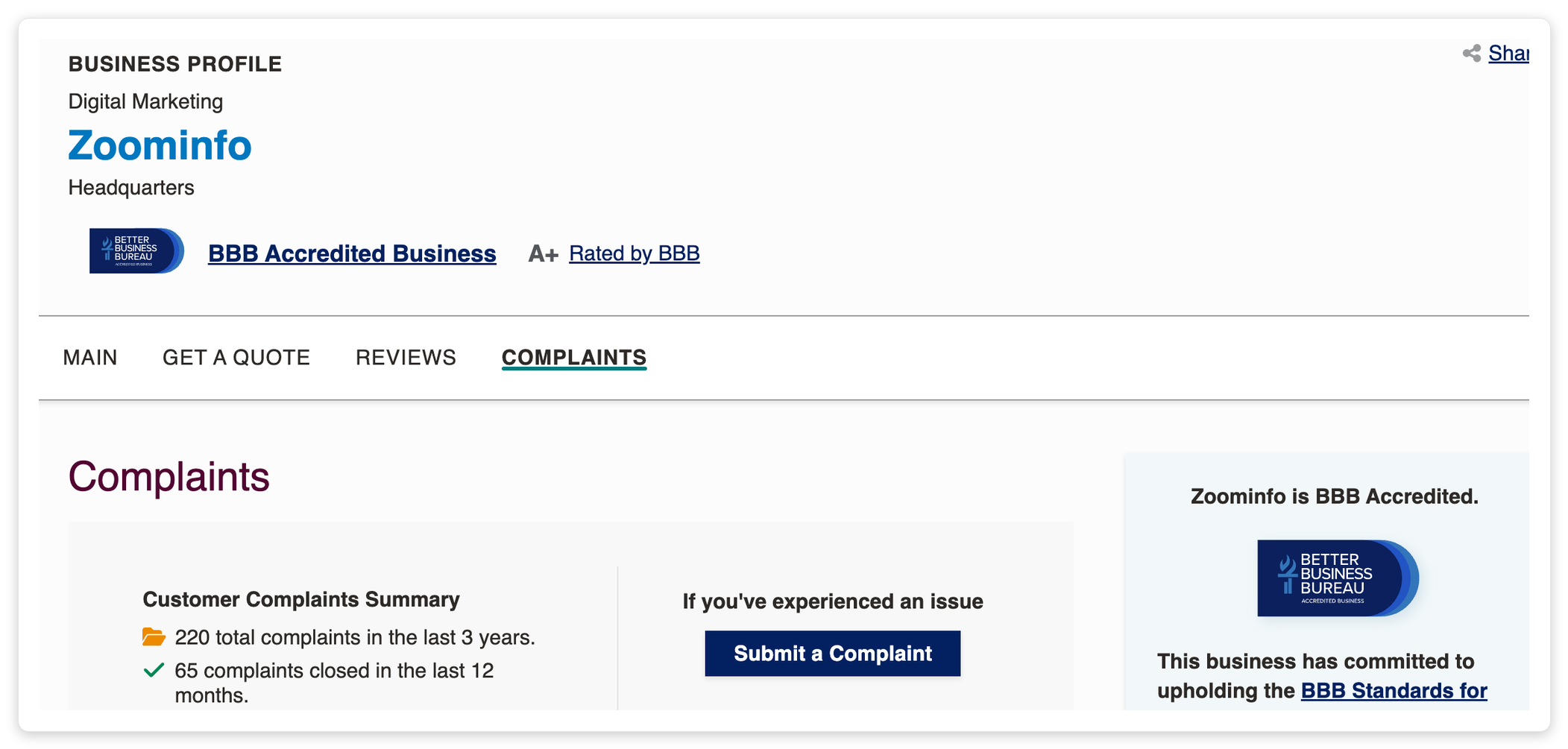

It got worse in 2024. Bloomberg Law reported a derivative shareholder lawsuit against ZoomInfo's leadership over "manipulative and coercive auto-renewal strategies." And The Revenue Architect documented their "honeypot" practice. Planting fake contacts in customer exports, then routing emails sent to those fakes to ZoomInfo's legal team to trigger renewal disputes.
Under 20 people, only buy enrichment vendors you can cancel month-to-month. Cognism is the only enterprise-grade exception worth considering. And even there, get the cancellation clause in writing before signing. Apollo, FullEnrich, Hunter, Smartlead, RB2B all let you walk away in 30 days. Use them.
Apollo isn't a cold-email tool. It's a cold-email tool that breaks every six months.
Apollo is the most-downloaded sales intelligence platform on the planet, and it's the wrong tool to send your cold emails through. The data is fine. The sequencer is the problem.
Apollo runs cold emails through shared sending infrastructure. When a million other Apollo users in your same vertical also send "Hi {{first_name}}, I noticed your team is hiring..." through the same IP pool, Gmail starts silently routing the entire pool to spam. Lume documented this pattern in March 2026: "Apollo shadowbans" where open rates that hit 40% a year ago drop to zero with no notification.
The fix isn't a different Apollo plan. It's exporting Apollo data, verifying it through FullEnrich or ZeroBounce, and sending from your own warmed infrastructure (Smartlead or Instantly) on dedicated domains.
Your Upwork bid history is the most underrated enrichment seed list in B2B
If you run a 5-15 person agency on Upwork, you already own the most underrated data enrichment asset in B2B sitting in your bid history. Every won contract is a labelled training row. Every lost bid is a pattern. Every job post you scanned but didn't apply to is a free piece of intent data.
The mistake most agency owners make is buying ZoomInfo or Apollo to "do outbound" before they've squeezed any of that signal out. Then they wonder why their cold email reply rate is 0.4% and their domain is in spam by month two.
The right sequence is the inverse. Take your last 10 won Upwork clients. Pull the company URL from each. Drop them into Apollo's "lookalike" search or Clay's similar-companies workflow. Enrich the 200 closest matches. Now you have a list of 200 companies whose hiring patterns mirror buyers who already paid you. That's revealed-preference intent data. Qualitatively different from a generic firmographic filter.
Filter to deals where the client posted a job (not invite-only). Public job posts give you the full firmographic snapshot of who hires you.
Look up the client's name, hire history, and review patterns on Upwork. The ones who paid $5K+ usually leave breadcrumbs to the parent company.
Apollo, ZoomInfo, and Clay all support similar-companies expansion. Pull 200 close matches by industry, headcount, tech stack, and funding stage.
FullEnrich Pro for the waterfall, Smartlead for sending on warmed inboxes. Reference the specific Upwork pattern in your subject line ("noticed you hired 3 React devs in Q1...").
This works because Upwork job posts are public, intent-loaded, and pre-qualified. Apollo's filter is a guess. Your bid history is data. The same logic powers any decent B2B lead generation stack and underpins how Upwork's API exposes the public job feed for legitimate aggregation.
GDPR and CCPA compliance in five minutes (the agency-friendly version)
If you're emailing EU prospects, the legal layer matters more than your tool choice. The good news: B2B outreach in the EU is overwhelmingly done under "legitimate interest," not consent. The bad news: most enrichment tools punt the actual compliance work back to you.
| Tier | Tools | What they actually do |
|---|---|---|
| Best-in-class | Cognism | DNC screening across 15 countries (UK TPS/CTPS, Germany Robinson, France Bloctel, Sweden NIX); ISO 27701 + SOC 2 Type II; "Notify" workflow handles German double-opt-in. |
| Compliant by jurisdiction | Apollo | Legitimate-interest assessment by external counsel; ISO 27001 + SOC II; DNC US/UK only. Chrome extension excluded from GDPR settings (in their own docs). |
| Compliant by claim | ZoomInfo, Lusha, Hunter, RocketReach | Self-attest GDPR/CCPA compliance; sourcing varies; the user applies their own legitimate-interest test. |
| Avoid the problem | RB2B | US-only by design. Their pixel literally won't fire on EU IPs because they refuse to engage with GDPR. |
For a sub-20-person agency with mixed-geo prospects, the practical order is: run Apollo for US, Cognism for serious EU outbound, and document a Legitimate Interest Assessment per record. Suppress on opt-out. Only contact business email addresses (no Gmail, no Yahoo). That covers 95% of the actual compliance risk.
The 30-day implementation playbook (Week 1 through Week 4)
If you're running outbound for the first time alongside Upwork, this is the build order. It's slower than "buy Apollo and start sending tomorrow." That's the point. Sending tomorrow is what kills your domain by week three.
1
Pull your last 10 won deals. Document client industry, headcount, tech stack, and the original job description. This becomes the canonical seed list for every enrichment workflow that follows.
2
Buy 2-3 secondary domains (not your main domain). Smartlead Pro for warmup and sending. Set DKIM, SPF, DMARC. Warmup takes 14 days minimum. Start before you have leads.
3
Apollo lookalike search → 200 companies → 1-2 contacts per company → FullEnrich waterfall verification → only keep the verified rows. Aim for 250-300 verified contacts. The throw-away rate from raw enrichment to send-ready list is normal. Usually 30-40%.
4
Send to 50 contacts/day max from each warmed domain. 3-touch sequence over 9 days. Goal: 3-5 booked meetings from the first 200. That's a $80-150 cost per meeting on a $400/mo stack. The benchmark to beat.
Free for Upwork agencies
Turn your Upwork bid history into the ICP layer your outbound was missing
GigRadar's Business Manager submits proposals for you on Upwork. Your won contracts become the labelled seed list every enrichment workflow needs. We run on our own BM account. Your freelancer profile is never touched.
Get Your Free Agency Audit →When you should not buy enrichment at all (yet)
If your Upwork close rate is below 5% and your monthly proposal volume is under 100, enrichment is a procrastination tax disguised as "scaling outbound." The bottleneck isn't lead volume. It's that your proposals are losing winnable deals.
Cancel the seat. Send 50 more Upwork proposals this week. Read cover letter patterns that hit 8%+ reply rates and rebuild your default template. Re-read the bidding fundamentals if you're under 5% close. Revisit enrichment once you have a repeatable inbound motion to mirror outbound against.
Every agency I've watched buy Apollo or Clay before hitting $30K MRR uses it for two weeks, sends 400 cold emails, gets a 0.8% reply rate, and quietly lets the seat renew for six months. Don't be that founder. Outbound is a force multiplier, not a substitute for a working pipeline.
The actual stack for most agencies under 20 seats
Cut through the matrix. For a US-focused agency with 3-8 seats sending outbound on top of Upwork inbound, the right monthly burn is $300-450. Not $1,500 and not $0.
The default 2026 sub-20-person agency stack:
- Apollo free plan for firmographic discovery and lookalike search ($0)
- FullEnrich Starter or Pro for waterfall verification before send ($69-149/mo)
- Smartlead Pro for warmed sending across 3-10 secondary inboxes ($94-174/mo)
- RB2B Starter for anonymous visitor unmasking on your US site ($79/mo)
- Hunter.io Free or Starter as a domain-level email-finder backup ($0-34/mo)
Total: $242-510/mo. Scales to ~30 booked meetings/month with a clean workflow.
Add Cognism only when you start serious EU outbound. And only after you've validated the offer with US Apollo data. Add Clay only when you're processing 1,000+ enrichments/month and have someone who can build workflows. Skip ZoomInfo until you're a 20+ seat operation with legal review on staff. If you're still pre-pipeline, fix the inbound first: automated Upwork outreach compounds faster than any cold email program at sub-20-seat scale.
Frequently asked questions
Which data enrichment tool has the best price-to-quality ratio for a 5-person agency?
Apollo's free plan paired with FullEnrich Starter ($69/mo). The free Apollo plan gives 100 email credits and 50 mobile credits per month. Enough for 30-40 lookalike companies enriched per week. FullEnrich verifies via waterfall before send. Total stack cost: under $100/mo. Add Smartlead Pro ($174/mo) when you start sending and the full setup is ~$250/mo.
Is ZoomInfo's data really worth its price for a small agency?
No. ZoomInfo's data is measurably better than Apollo's, but for an agency under 20 seats, the contract structure (3-year auto-renewing, 60-day cancel window) is a worse risk than any data quality issue. Multiple founders have been locked into $45K commitments after their outbound experiment failed. Stick to month-to-month vendors until you're 20+ seats with legal review.
Can I use Clay without a dedicated RevOps person?
Realistically, no. Clay's $185-495/mo base price is just the entry fee. A useful waterfall workflow burns another $400-800/mo in third-party credits. Maintenance, debugging, and credit optimization eat 5-10 hours a week of someone's time. Below 1,000 enrichments/month, FullEnrich Pro plus a $400/mo VA produces cleaner data with less complexity.
What's the actual reply rate I should expect from cold email with good enrichment?
The 2026 average across cold email benchmarks is 3.1-3.43%. Top 10% of senders hit 8-12%. Verified data delivers roughly 2x the reply rate of unverified data. If you're under 1.5% with verified data and a tight ICP, the problem is the offer or the copy. Not the enrichment tool.
Will enrichment tools work for outreach to companies I found on Upwork?
Yes. And this is the highest-ROI use case for enrichment that exists for an Upwork agency. Pull your won client companies from Upwork, run lookalike searches in Apollo or Clay, enrich the matches through FullEnrich. You're feeding the enrichment tool the strongest possible seed list (revealed-preference data from people who already paid you), not a generic firmographic guess. Reply rates on this approach typically run 1.5-2x higher than blind ICP outbound.
Are these tools GDPR-compliant for emailing EU prospects?
Cognism is the only one designed ground-up for GDPR (DNC screening across 15 EU countries, 16-step verification, ISO 27701). Apollo claims GDPR compliance but admits in their own docs that the Chrome extension is excluded from GDPR settings. ZoomInfo, Lusha, Hunter, RocketReach all self-attest. For a serious EU campaign: use Cognism, document a Legitimate Interest Assessment per record, and only contact business email addresses. For ad-hoc EU outreach with Apollo: scrub against UK TPS/CTPS and target country DNC registries manually before send.